TAMPA, Fla. — A half-century ago, John and Cindy Ingram built a strong reputation emphasizing family.
Besides their children, their children’s spouses, and their grandchildren, that definition also includes the thousands of students who have bowed at the door of Ingram’s Karate dojos since 1977.
Each evening, these spaces, which some treat like holy ground, spring to life. Crisp white uniforms snap as students kick, punch, and shout, “kiai!”
Soon, a different type of energy will be seen before dark, when homeschoolers come to sharpen their core academic skills and participate in some “old-fashioned P.E.”
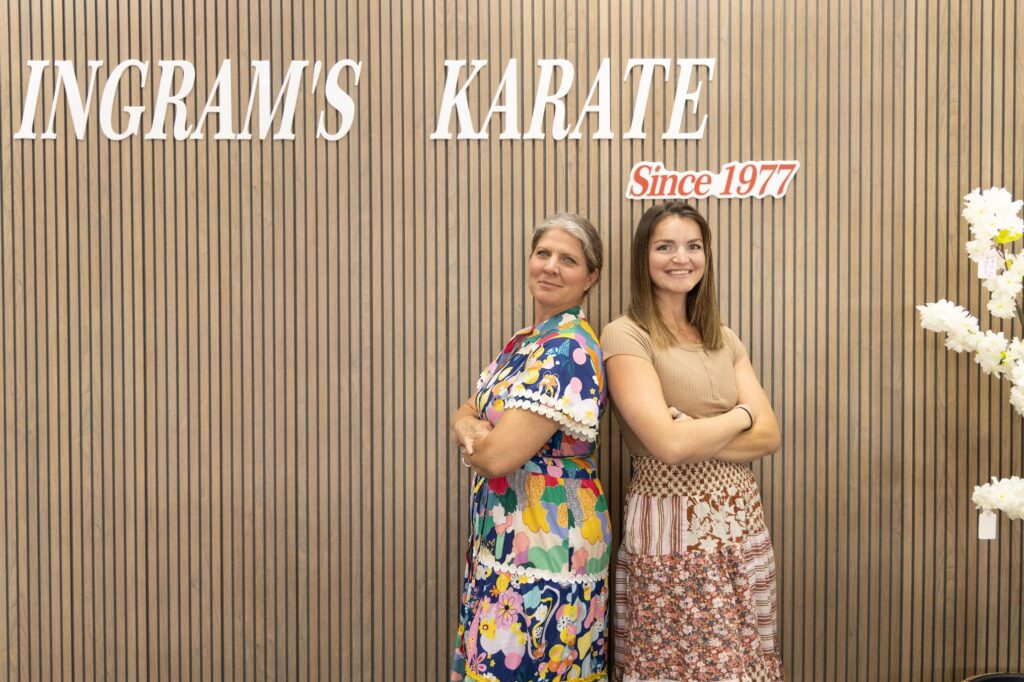
Ingram’s Balanced Path Learning will open in September as a homeschool co-op two days per week at two of its three dojos in the Tampa Bay area.
“We have these beautiful facilities that are only used in the evening. It's like everything just lined up,” said Sheri Ingram-Angwin, a former homeschool mom and seventh-degree black belt. A daughter of John and Cindy Ingram, she owns the Carrollwood and New Port Richey dojos. Both accept direct payment for karate fees from education savings accounts administered by Step Up For Students.
“I don’t know how we didn’t think of it for so long.”
According to Step Up For Students, almost 50 martial arts providers across Florida accept direct payment for participation in their programs, either as P.E. or enrichment. That does not include providers for which parents receive reimbursements after up-front, out-of-pocket payments. These providers are part of the state's rapidly growing number of à la carte learning options. In 2024-25, Florida had 4,318 non-school education providers offering à la carte courses, tutoring, extracurriculars, and more, which was more than double the number from the year before.
By opening an academic co-op alongside its karate program, the founders of Balanced Path will take things a step further. Angwin’s daughter-in-law, Leanna Angwin, and sister, Ashley Bache, will teach classes in math, reading, history, and science. Both hold state teaching certificates. Bache and Leanna have teaching experience at a classical charter school and a district middle school.
Most recently an eighth-grade math teacher, Leanna originally studied to become an accountant. But she realized after a couple of internships that “I really didn’t like it.”
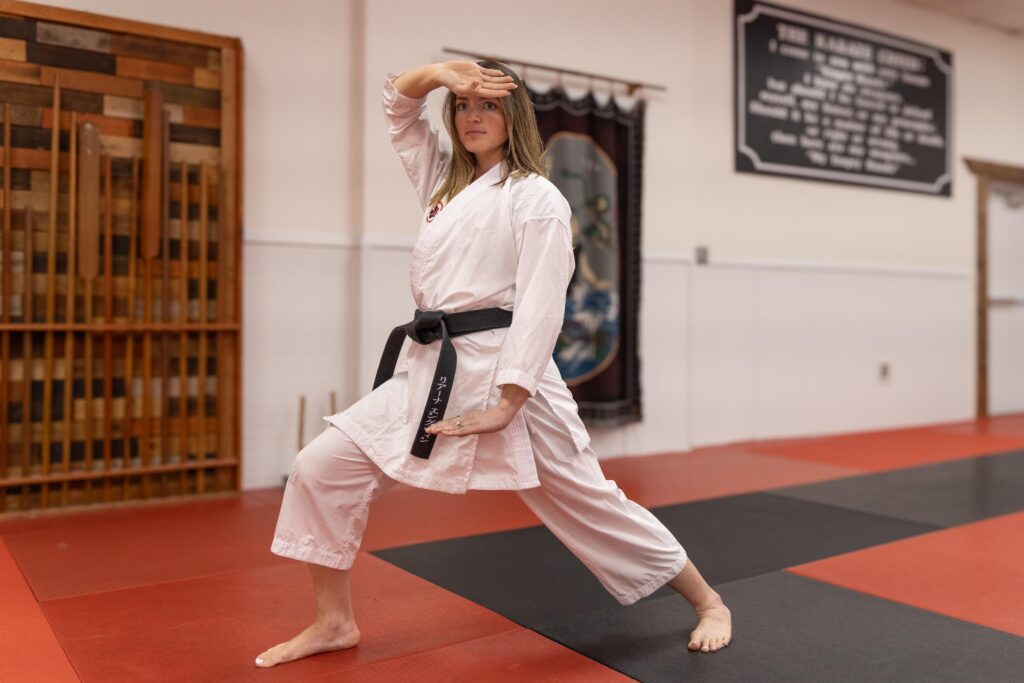
During her search for her true calling, she recalled how she had enjoyed helping people with homework. Now training for her second-degree black belt, Leanna also found fulfillment at the dojo in helping kids learn fundamentals. She joined Ashley, whom she affectionately calls her "aunt-in-law," at the charter school before the two headed to the public school for better pay and state benefits.
After a while, Leanna found herself wanting something that felt more rewarding, like the private tutoring she was doing on the side. She also found herself wanting to homeschool her future children.
“My mom was a stay-at-home mom, and I got to spend a lot of time with her, and my dad worked from home,” she said. “So, I see the importance of kids being at home with their parents.”
For Ashley, a former horse anesthetist, tragedy led her to a career in teaching. A car accident left her husband paralyzed from the neck down. A mother of three young children, Ashley needed a job that offered financial support for her family and the flexibility to care for her husband.
She started as a P.E. aide at the classical charter school before being promoted to run the program. She later became a classroom teacher.
She fell in love, not only with helping the kids, but also with a hands-on teaching style.
“I know I learn better with hands-on,” said Ashley, who will teach math and science at Balanced Path Learning. “It’s so easy to bring in all the manipulatives and the tools for teaching because we already have a lot of them.”
One day after school, Leanna saw a homeschool co-op flyer. They were hiring. During her interview, she found out the positions she was interested in had been filled. Afterward, she headed straight for the dojo to talk with her mother-in-law about possibly starting their own program.
She was like, ‘We should do that,’” Leanna recalled.
They shared their vision with Ashley. She was all in. Balanced Path Learning was born.
The three say it offers students the best of both worlds: the chance to be with family and work with a professional educator who can help keep them on track and accountable.
“I’ve watched how the status quo isn’t necessarily good enough anymore,” said Sheri, who homeschooled her two sons before education savings accounts existed. “All these years, everybody just always thought this is how you have to do it.
“And then COVID really changed that because everyone realized we don’t have to do it the way we’re told; we can do it on our own terms. I feel like there are a lot of parents who want to homeschool their kids. But they’re nervous about it, or maybe they don’t have the time.”
Sheri was one of those parents. In the beginning, she felt overwhelmed by the number of curriculum choices, which at the time seemed like “8 million.”
“I cried the day all the books showed up at my door,” she recalled.
But after becoming acclimated, she began to see and love the benefits.
“When it came time for history, when my kids were little, we went to Savannah, and we learned while we were there, and they learned things and experienced things that you can't really do unless you’re homeschooling,” she said.
At Balanced Path Learning, a typical day for those in kindergarten through fifth grade will start at 9 a.m. with lessons in science or history, depending on the location. Students in middle and high school can attend and work independently during lesson times.
Lesson blocks are 50 minutes long and followed by breaks for movement, which might be a game of freeze tag or learning new dance moves. Students transition to reading and math groups at 10 a.m.
Students take a 10-minute snack break at 10:50 a.m.
Afterward, the groups switch subjects, with those in reading starting math and those who were in math going to reading.
After a second active brain break, they can do optional electives from noon until 1 p.m. when the day ends. Electives include physical education, with fitness drills, relays, and games. Optional karate is also offered one day a week at each location. Students do not have to participate in any karate programs to attend Balanced Path Learning.
Co-op locations are closed on Fridays, with optional field trips offered one Friday a month for an extra fee.
Parents are already signing up. Rachael Martinez said her three kids, who are entering fourth, third, and first grades, will transfer from a charter school to Balanced Path with the help of state education savings accounts.
“I kept begging her to do it,” said Martinez, who said Leanna tutored her oldest child and taught the second one at the charter school.
Small class sizes and the opportunity for self-paced learning drew Martinez to the co-op.
“They’re not rushed to meet somebody else’s standards versus their own needs,” she said.
One is on an individualized education plan for speech issues and thrives with one-on-one instruction. Another gets everything on the first try. The youngest is “a little spitfire,” finishing kindergarten.
“They’re all 100% different,” said Martinez, a preschool teacher.
Leanna, who will teach reading, said she and her partners made a list of the most important things they felt were missing from traditional schools. At the top: Opportunities to be active.
“Collectively, we feel like sometimes they expect too much of kids, to sit still and be quiet for too long.”
That’s the reason for the “active brain breaks.”
Sheri continues to view the project with a sense of awe. She said she has seen things come together and barriers easily fall away, just like the plywood boards that snap in two if students use the proper technique. She calls it “a God thing.”
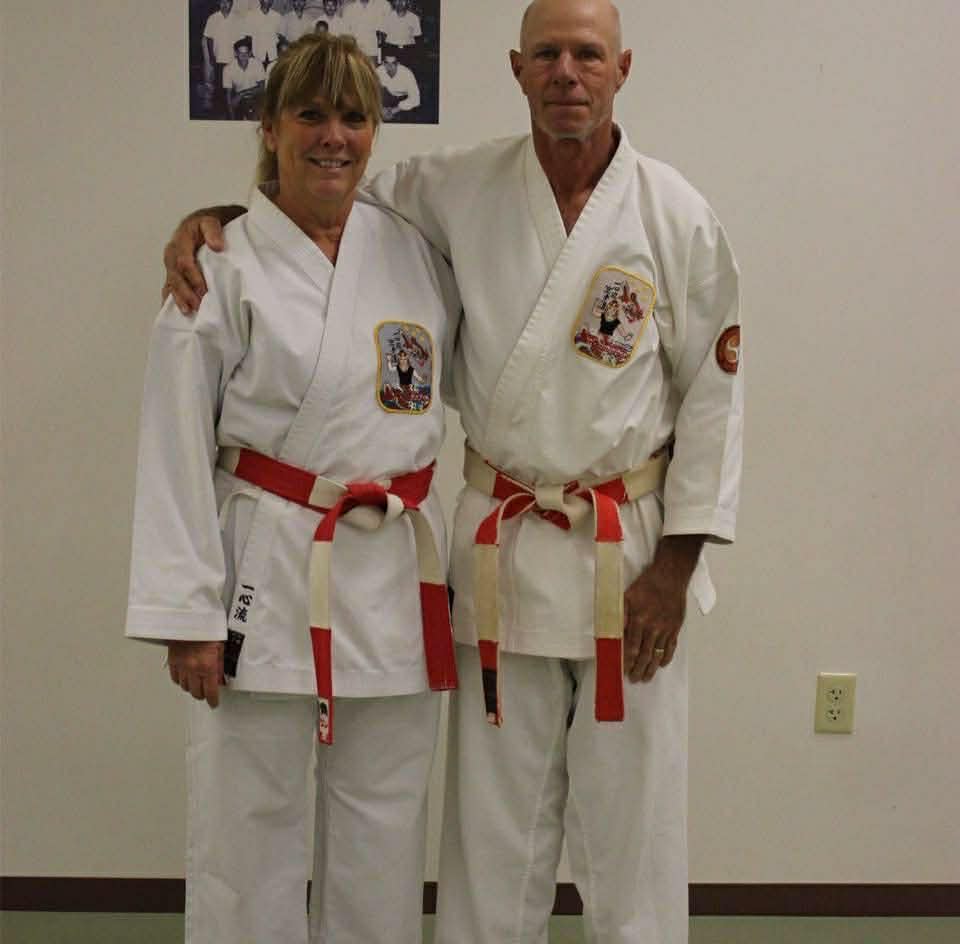
But she also sees it as very much a family thing, an extension of the dojo her parents opened in 1977.
“We have been working with kids for 50 years, and our family knows how to work with kids and how to make them thrive, and then I have two teachers who are the most beloved teachers in the whole school, and I'm like, why did this take so long to come to us, but it's just perfect.”